
Indigenous Collections and Repatriation (ICAR)
The Indigenous Collections and Repatriation department at the Royal BC Museum works with First Nations, Métis and Inuit communities across British Columbia to care for and return cultural belongings.
The department also supports community access to the museum’s collections and helps ensure that Indigenous perspectives shape how these materials are preserved and shared.
-

Former Repatriation Specialist Michelle Washington in the collections. Print: Art Thompson, Sea Urchin, ICAR 14890 A,B -

Micheal Nicoll Yahgulanaas, Orcinus Orca SKAAnaa, 2019, ICAR 20509 -

Bill Reid, Beaver Killer Whale Box 1971, ICAR 13902 A,B


Why This Work Matters
The Royal BC Museum cares for thousands of items, held in trust, that reflect the languages, histories and cultures of Indigenous peoples in BC. These include ceremonial objects, tools, regalia, photographs, recordings and artworks—some created generations ago, others more recently. Many of these belongings hold deep cultural significance and are connected to living traditions.
We are committed to supporting Indigenous communities in reclaiming, researching and caring for cultural belongings on their own terms.
Supporting Repatriation and Access
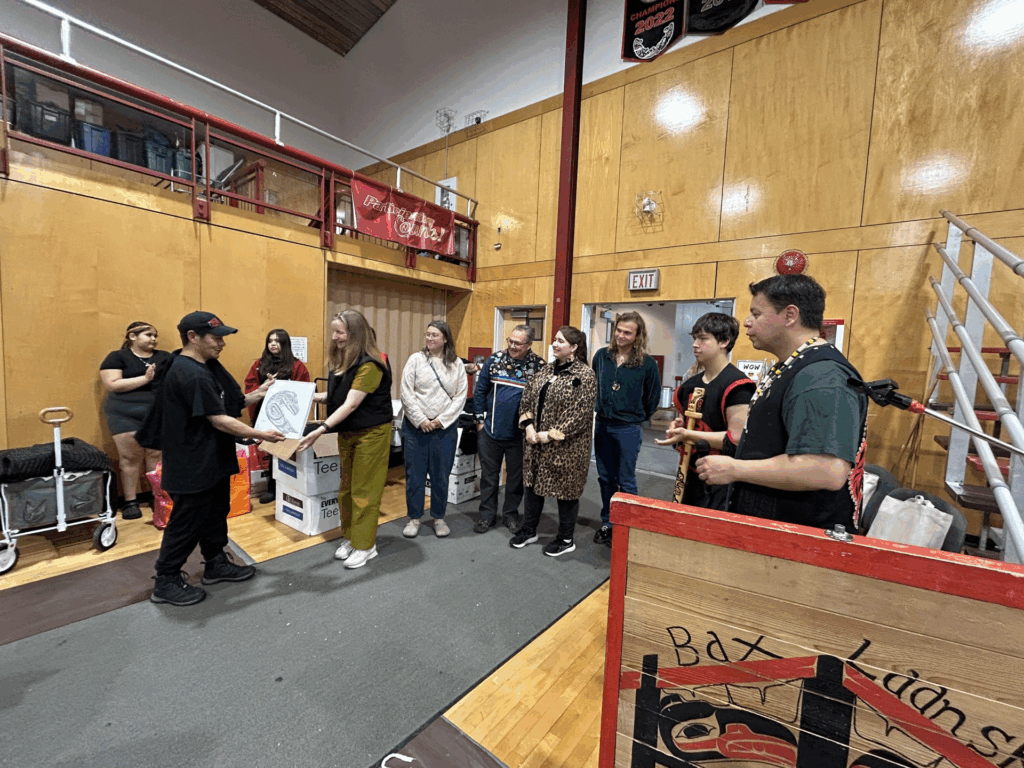
The museum works with communities to return cultural belongings and ancestral remains. Our team helps facilitate repatriation by identifying items in the collection, supporting documentation, and ensuring respectful handling and return.
In some repatriation cases, communities have expressed a desire for the museum to retain their belongings and to transfer the ownership back to the communities, while others have wished for their belongings to be physically returned home. Through ongoing communication, community visits, and open dialog we are working with communities to ensure that their wishes for their belongings are being honored, whether that is through repatriation, or other aspects of museum work.
We also help provide access to collections for community members, artists, researchers and educators.
This work is guided by the United Nations Declaration on the Rights of Indigenous Peoples and grounded in ongoing conversations with communities.
Collection Areas
The Indigenous collections at the Royal BC Museum represent thousands of years of culture, language and history. These collections include a wide range of materials—each one connected to specific communities and places across British Columbia.
What’s in the Collection
Indigenous Belongings
Previously Ethnology
Over 14,000 cultural belongings, including regalia, tools, carvings, everyday items and contemporary art. This includes intricate cedar bark weavings, bentwood boxes and masks, highlighting the creativity and diversity of First Nations across BC.
Photography & Film
More than 65,000 historical and modern images, from early field photographs and studio portraits to community documentation.
Images range from 19th-century portraits by Hannah Maynard to modern snapshots of community events, helping to document over 150 years of Indigenous history in BC.
Sound & Moving Images
Around 3,700 audio recordings and 200 video tapes that preserve languages, stories, songs and ceremonies. Access to some materials requires community permission. These include recordings of traditional songs, oral histories and potlatches—many of which are in languages that have few fluent speakers today.
Archaeology
With nearly 225,000 catalogued artifacts, the museum holds the largest collection of BC First Nations archaeological materials in the world. The collection includes stone, bone, shell, wood and excavation records dating back 10,000 years. It includes items like obsidian blades, fishing tools and shell beads that tell the story of Indigenous life across millennia.
BC Archives
Documents and records that reflect colonial policies, land rights, language, art, activism, and cultural resurgence—from the 1790s to today. Key records include the Douglas Treaties, residential school documentation and First Nations Band Council files. There are 27 linear kilometres of records in the BC Archives.
Why It Matters
These collections are used by Indigenous communities, artists, researchers and educators to support cultural knowledge, community history and language revitalization. They are an important resource for learning, collaboration and ongoing dialogue.
The Royal BC Museum recognizes that relationships with Indigenous communities continue to evolve. Many nations are reclaiming stewardship of their histories while also choosing how and when to share cultural materials. We are committed to supporting Indigenous sovereignty and working together in respectful partnership.
Get Involved
Want to learn more? Whether you’re a community member, institution, or curious visitor — start here.
Contact Us
See how the ICAR team’s work extends across the museum and throughout BC
-

-
News
-

-
exhibition


