
Digital Field Trips
Can’t get here in person? No problem! We bring the museum to you with our Digital Fieldtrips, engaging 30-minute programs for K–12 classes.
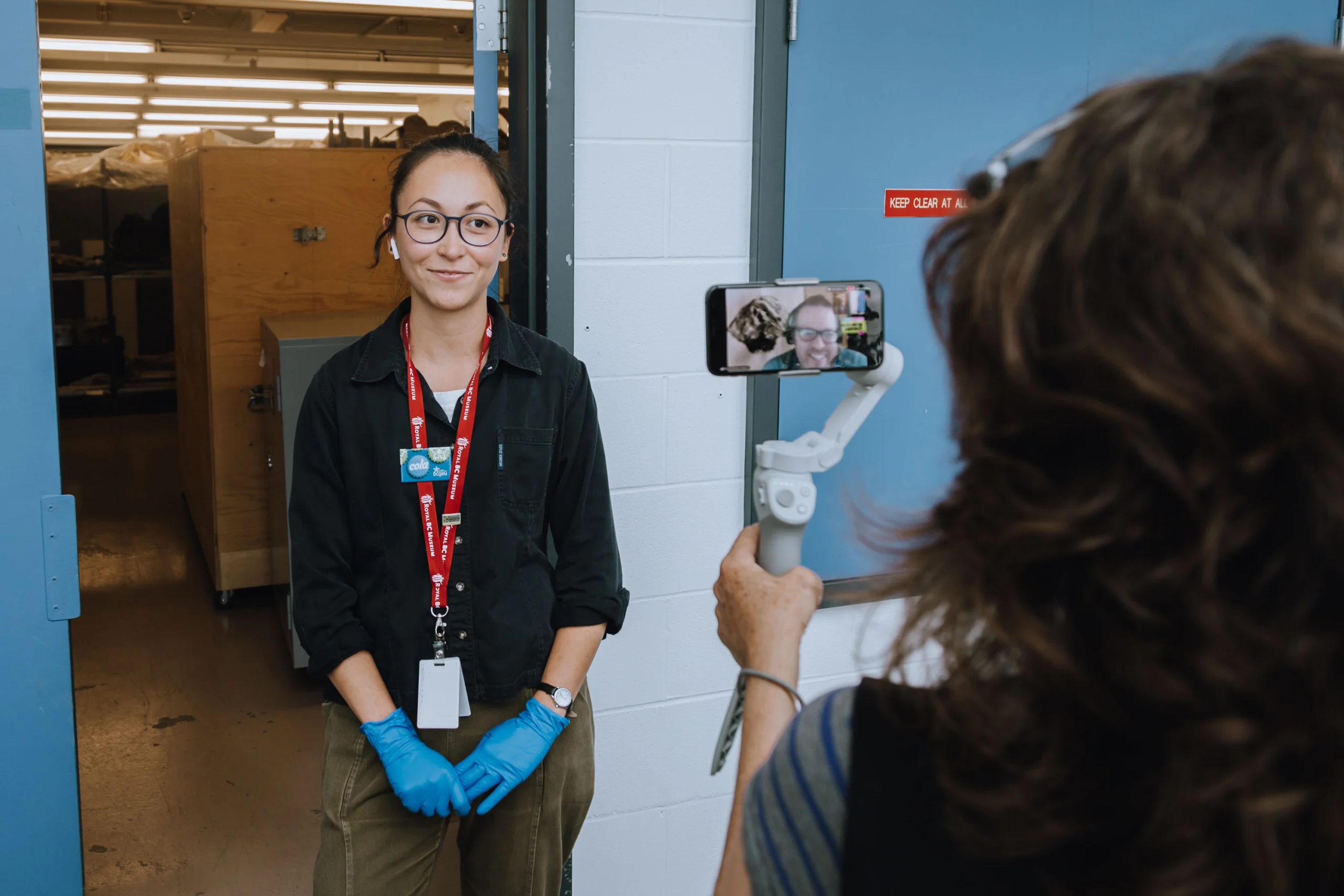
These live, interactive programs are led by our staff and designed to be inquiry-based, ensuring a dynamic and engaging experience. With two-way interaction, we can see and hear you, and you can see and hear us, making classroom participation both fun and educational.
To participate, you’ll need a computer with a camera, a wired high-speed internet connection, and a large screen with sound. For questions about technology requirements, accommodating different audiences or ages, or any other inquiries, please contact us.

Programs
Grades K-3
Program Length
30 minutes
Designed for
Grades K-3
Cost
$75
Program Description
Plants and animals have features (body parts) and behaviours that help them survive. These are called adaptations. Learn about some BC animals and the amazing ways they survive and thrive in our local environments through this visit to the natural history gallery.
Program Keywords/Vocab
Adaptation, Behaviour, Habitat, Ecosystem
Program Format
- Introductions to the Royal BC Museum, the presenter, and an overview of the program
- Visit the Forest Diorama (Forest as type of habitat)
- Practice observation skills and record or draw on worksheet
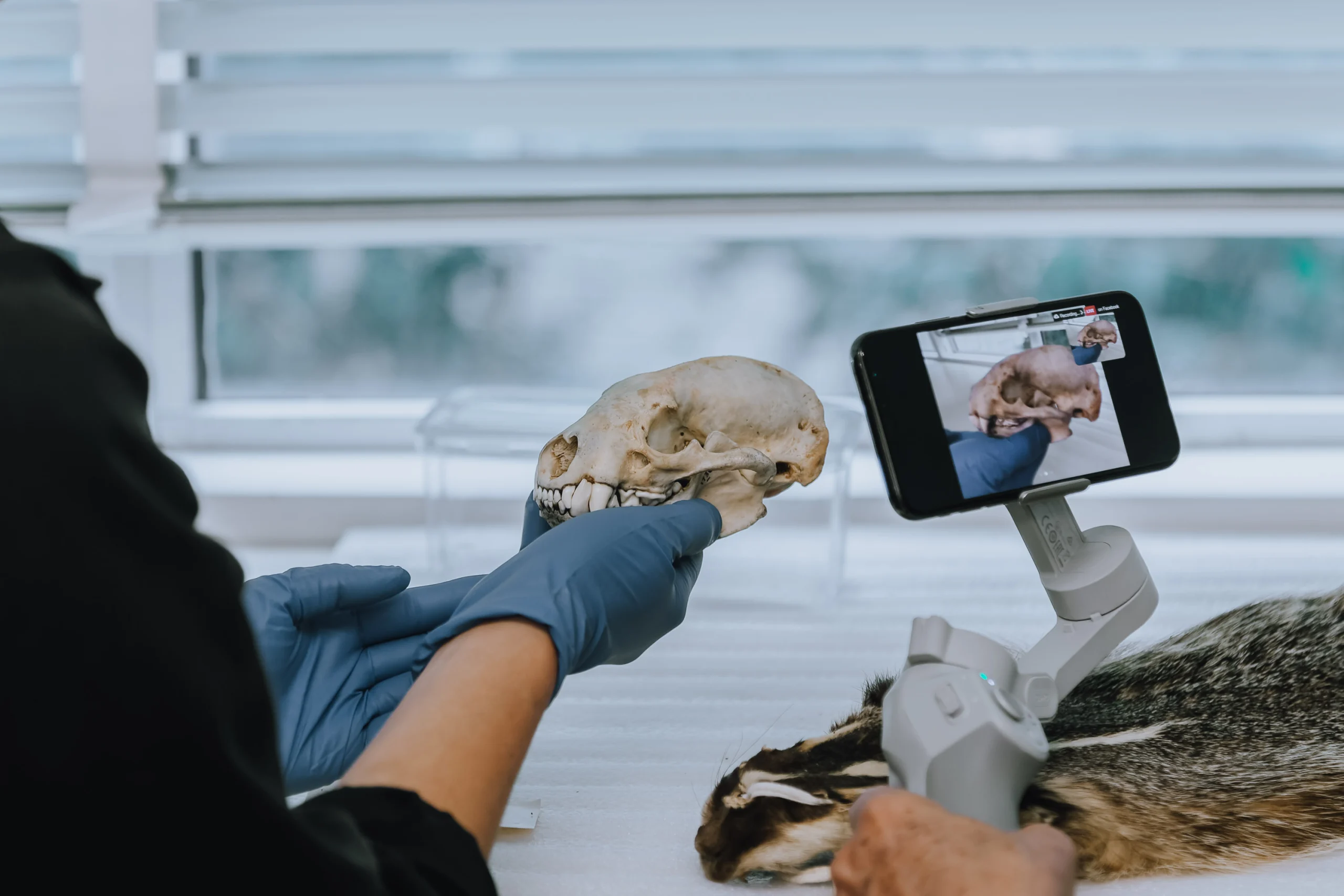
- Go behind the scenes for a close up look at some taxidermied animals, bones, furs and models of different animal adaptations
Learning Objectives
- Practice observation skills
- Be able to describe at least three examples of BC animal adaptations
- Demonstrate curiosity about the natural world
BC Curricular Connections
Grades K-3 Science, examples of Content
- Science K Content – Basic needs of plants and animals; Adaptations of local plants and animals
- Science 1 Content – Structural features of living things in the local environment; Behavioural adaptations of animals in the local environment
- Science 3 Content – Major local landforms (eg. mountains, riverbeds, deltas, oral narrative about landforms)
First Peoples Principles of Learning
- Learning is holistic, reflexive, reflective, experiential, and relational (focused on connectedness, on reciprocal relationships, and a sense of place)
Program Length
30 minutes
Designed for
Grades K-2
Cost
$75
Program Description
Explore the different ways dinosaurs used their bodies to survive in their habitats millions of years ago. Through the inspection of plant and dinosaur fossils, students will discover how dinosaurs found food and interacted with their environments. They’ll even learn how animals on earth now give us clues about how dinosaurs looked and behaved.
Program Keywords/ Vocab
Environment, Adapt, Habitat, Carnivore, Herbivore, Fossil, Paleontologist, Feature, Survive, Predator, Prey. Evidence, Climate
Program Format
- The program begins with introductions to the Royal BC Museum, presenter, and an overview of the program
- Brainstorm what animals needs to survive (food, water, shelter)
- Look at animals today to find similarities to dinosaurs (i.e. teeth of carnivores and herbivores)
- Move like a Sauropod stretch activity
- Discuss dinosaur’s environment in British Columbia
- Draw a Dinosaur group activity
Learning Objectives
- Use critical thinking to make connections between living creatures and their environments
- Discover connection between an animal’s body and their basic needs (i.e. sharp teeth for food)
- Appreciate the diversity of dinosaurs
BC Curricular Connections
Grades K-2 Science, for example
- Science K – Plants and animals have observable features
- Science 1 – Living things have features and behaviours that help them survive in their environment
- Science K-2 – Demonstrate curiosity and a sense of wonder about the world
First Peoples Principles of Learning
- Learning involves patience and time.
Program Length
30 minutes
Designed for
Grade 3-5
Cost
$75
Program Description
Get up close and personal with insects! Insect bodies and behaviours have a lot to teach us. Join us as we investigate insect specimens from the Royal BC Museum collections. Bring your curiosity for this interactive look into the world of Insects!
Program Keywords/Vocab
Head, thorax, abdomen, antenna, compound eyes, exoskeleton, adaptation behaviour, habitat, ecosystem
Program Format
- Introductions to the Royal BC Museum, the presenter, and an overview of the program
- Body parts. Through photographs, diagrams and specimen observations we determine what makes an insect
- Through observation and movement, we explore insect behaviour and ecology
- Practice observation skills on two species of insects that live in British Columbia.
- Q&A. Wrap up
Learning Objectives
- Practice observation skills
- Define what an insect is
- Demonstrate curiosity about the natural world
BC Curricular Connections
Grades 3-5 Science, examples of Big Ideas
- Science 3 – Living things are diverse, can be grouped, and interact in their ecosystems.
- Science 4 – All living things sense and respond to their environment.
- Science 5 – Multicellular organisms have organ systems that enable them to survive and interact within their environment.
First Peoples Principles of Learning
- Learning is holistic, reflexive, reflective, experiential, and relational (focused on connectedness, on reciprocal relationships, and a sense of place)
Program Length
30 minutes
Designed for
Grade1, 3-4
Cost
$75
Program Description
Learn about the Ice Age and the Woolly Mammoths who lived there. Using images, video and objects we will learn about how Woolly Mammoths adapted to survive in the Ice Age. There are lots of opportunities for questions and interaction.
Program Keywords/ Vocab
Climate, Glaciers, Tundra, Mammals, Extinct, Herbivores, Keystone Species
Program Format
- The program begins with introductions to the Royal BC Museum, the presenter, and an overview of the program
- Introduction to the Ice Age environment and mammals
- “Meet” the Woolly Mammoth
- Take a close up look at a piece of mammoth tusk, a cast of a mammoth molar and hair from a muskox
- Hypothesize about what happened to the Woolly Mammoth
- Review and a chance for final questions before we wrap up
Learning Objectives
- List three unique features of the Woolly Mammoth that helped it to survive in the Ice Age
- Learn about features of the Ice Age environment
- Explore how scientists know about the way Woolly Mammoths lived and died
BC Curricular Connections
Grades 1,3-4 Science, examples of Big Ideas
- Science 1– Living things have features and behaviours that help them survive in their environment
- Science 3 – Living things are diverse, can be grouped, and interact in their ecosystems; wind, water and ice change the shape of the land
- Science 4 – All living things sense and respond to their environment
First Peoples Principles of Learning
- Learning is holistic, reflexive, reflective, experiential, and relational (focused on connectedness, on reciprocal relationships, and a sense of place)
Grades 4-6
Program Length
30 minutes
Designed for
Grade 4
Cost
$75
Program Description
In 1858, when gold was discovered in the Fraser River, what is now known as British Columbia became a destination for hopeful miners from around the world. For every gold seeker who rushed here, there were factors that drove them from their homelands and dreams that enticed to a new and foreign place. The impacts of the gold rush on British Columbia were large, and lasting.
Program Keywords/ Vocab
Colonialism, Immigration, Migration, Prospectors, Discrimination, Diggings, Sluice, Waterwheel
Program Format
- The program begins with introductions to the Royal BC Museum, the presenter, and an overview of the program
- We will discuss the allure of gold
- Learn more about the people who participated in the Gold Rush of 1858
- See different methods and tools for finding gold
- Summarize how the gold rush changed the people, lands and economy of the province
Learning Objectives
- Know the unique properties of gold
- Recognize a variety of reasons why immigrants came to Canada during the gold rush
- Understand the intended and unintended consequences of the gold rush on the development of British Columbia
BC Curricular Connections
Grade 4 Social Studies, examples of Big Ideas
- Social Studies 4 – The pursuit of valuable natural resources has played a key role in changing the land, people, and communities of Canada
- Social Studies 4 – British Columbia followed a unique path in becoming a part of Canada
First Peoples Principles of Learning
- Learning involves recognizing the consequences of one‘s actions
Program Length
30 minutes
Designed for
Grade 1, 3-4
Program Description
Learn about the Ice Age and the Woolly Mammoths who lived there. Using images, video and objects we will learn about how Woolly Mammoths adapted to survive in the Ice Age. There are lots of opportunities for questions and interaction.
Program Keywords/ Vocab
Climate, Glaciers, Tundra, Mammals, Extinct, Herbivores, Keystone Species
Program Format
- The program begins with introductions to the Royal BC Museum, the presenter, and an overview of the program
- Introduction to the Ice Age environment and mammals
- “Meet” the Woolly Mammoth
- Take a close up look at a piece of mammoth tusk, a cast of a mammoth molar and hair from a muskox
- Hypothesize about what happened to the Woolly Mammoth
- Review and a chance for final questions before we wrap up
Learning Objectives
- • List three unique features of the Woolly Mammoth that helped it to survive in the Ice Age
- • Learn about features of the Ice Age environment
- • Explore how scientists know about the way Woolly Mammoths lived and died
BC Curricular Connections
Grades 1,3-4 Science, examples of Big Ideas
- Science 1– Living things have features and behaviours that help them survive in their environment
- Science 3 – Living things are diverse, can be grouped, and interact in their ecosystems; wind, water and ice change the shape of the land
- Science 4 – All living things sense and respond to their environment
First Peoples Principles of Learning
- Learning is holistic, reflexive, reflective, experiential, and relational (focused on connectedness, on reciprocal relationships, and a sense of place)
Details and Booking Information
Bookings now open for programs between September 9th ,2025 and June 25th, 2026
Audience
K–12, varies by topic
Availability
Varies by topic
Program Length
30 minutes
Cost
$75 per class
Capacity
Up to 30 participants per program.
For groups larger than 50 and joining from one location, or for participants joining from more than 40 different locations, please email us at dft@royalbcmuseum.bc.ca to book a webinar format visit instead.
Schedule
English
Wednesday – 9:30 am, 10:30 am, and 1:00 pm
Thursday – 9:30 am, 10:30 am, and 1:00 pm
French
Currently not available
Book Your Digital Field Trip
Select a digital visit from the available dates
Tech Test
Book a free 5–15 minute tech test (available Wednesday afternoons) after booking your digital field trip. Recommended for new users or to check your setup — computer, projector, speakers, microphone, etc.
Get Digital Field Trips support
We recommend booking your online program at least two weeks (10 business days) in advance. We require a minimum of two business days for all booking requests. Bookings are made based on availability, so we encourage you to plan ahead. Note that our bookings for school programs close in June and reopen in late August.
No! You just need access to the internet and a web browser. If you require a different platform, please contact us at dft@royalbcmuseum.bc.ca.
Most programs can be adjusted for other age group (including adults!) Contact dft@royalbcmuseum.bc.ca for your specific inquiry.
Seeing the students helps with interactivity and makes it more personable. However, we can still do the program without seeing the students if there are privacy concerns.